Groningen renews tracks: efficient disposal, smart reuse
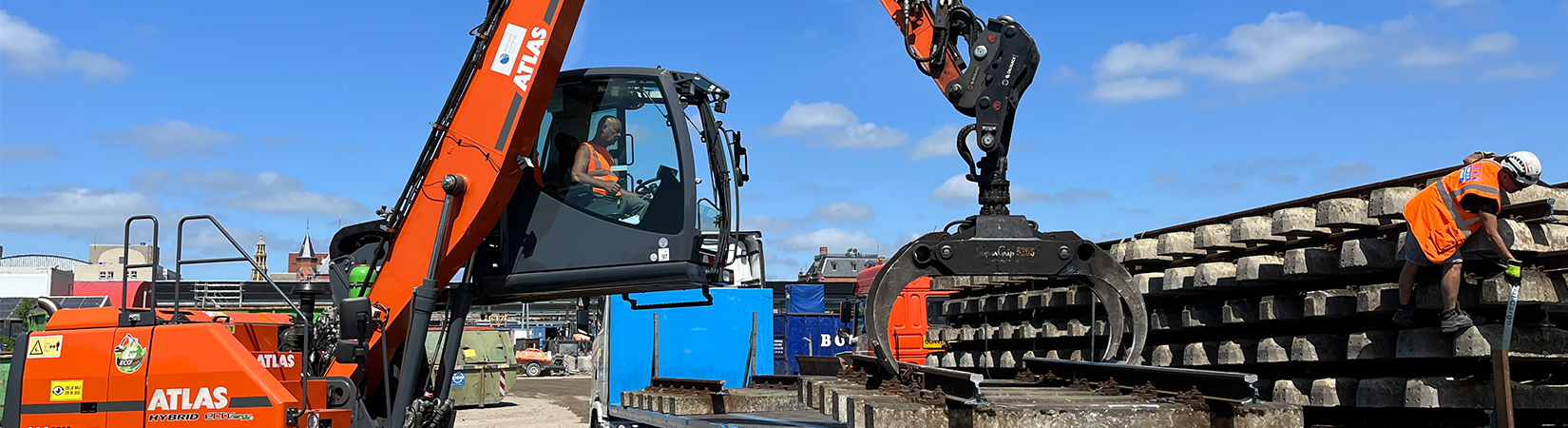
No fewer than 55 flatbed trucks were needed. The track renewal project in Groningen began on May 10 with the removal of old track sections. But where removal often marks the end of the line for railway materials, this project gives them a second life. The 55 trucks headed to our reuse and recycling facility in Hilversum, where the track sections are dismantled and undergo a thorough quality inspection. After that, materials are sorted and made available for reuse in the railway sector or for other recycling purposes.
Large-scale track closure
The removal is part of a large-scale 64-day track closure in Groningen. During this period, contractor Strukton is carrying out intensive work, including major track renewal.
A project of this scale involves much more than just laying new tracks. Before that can even begin, the old materials must be removed and processed. We can support our customer the best by a responsible and efficient removal of used track sections, with a focus on reuse and
Tailored transport
To execute the logistics efficiently, we relocated the crane from our reuse and recycling facility in Hilversum to Groningen specifically for this project. This allowed us to load the released sections directly onto flatbed trailers. The advantage of flatbed trailers is that more track sections can be loaded than on a truck with a truck-mounted crane. Jaap Pol, foreman of the reuse and recycling facility, managed the truck loading using the crane: “By working with flatbed trailers and our own crane, we significantly increased transport efficiency,” he says. “This way, we save both time and trips.”

Dismantling and sorting in Hilversum
After arrival in Hilversum, the track sections are carefully dismantled and sorted. Materials that are immediately suitable for reuse — or can be adapted for reuse — are labeled and added to our stock. Components that cannot be reused within the rail infrastructure are offered on the so-called recycling market. The goal is clear: minimize waste and maximize value for the railway sector. By giving used materials a second life, we reduce our ecological footprint and actively contribute to a circular rail infrastructure.
The second life phase
The recovered materials will soon be used in various Strukton projects. For example, during the track renewal on the Maarn–Ede line, NS90 sleepers that were previously removed in Groningen are being reused. In this way, we make a tangible contribution to a more sustainable railway infrastructure.
Want to stay informed about our work in Groningen and other sustainable initiatives in our projects? Subscribe to our newsletter and always stay up to date with the latest news.