Bridge Transitions and Expansion Joints on Railway Bridges: New Requirements Demand a Different Approach
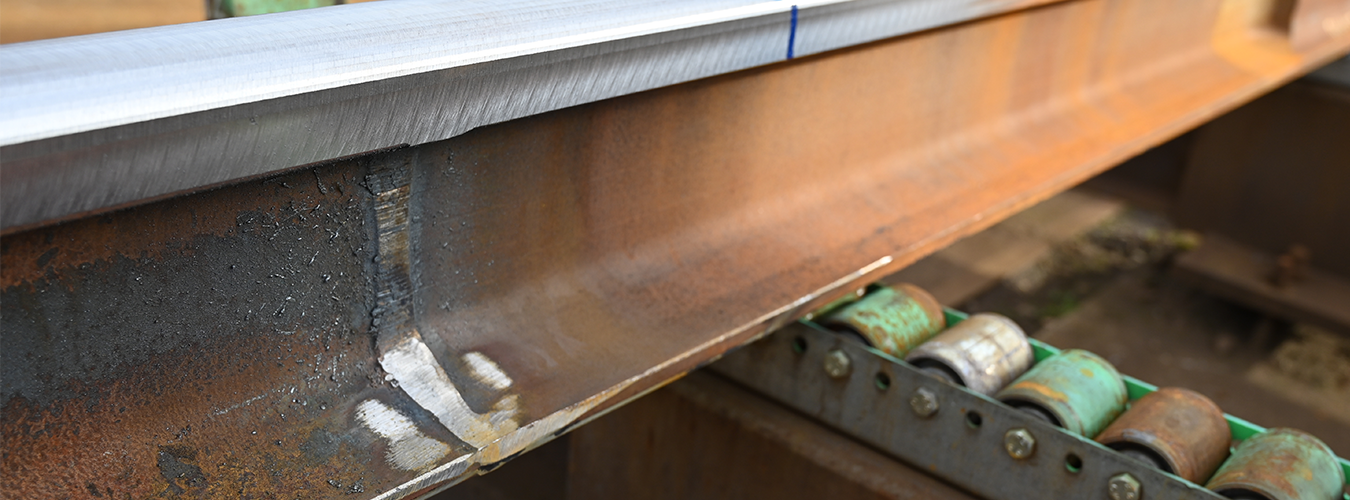
Many railway bridges in the Netherlands have been part of the rail infrastructure for decades. At the same time, track availability is becoming increasingly important, while maintenance and renewal projects must be completed within shorter possession periods. Meanwhile, new ProRail requirements mean that certain designs of expansion joints, bridge transitions and welded connections are being phased out, creating the need for alternative solutions.As a result, technical choices, component availability and project execution planning are becoming increasingly interconnected for contractors and infrastructure managers. Especially on railway bridges, thorough preparation is therefore more important than ever.
New Requirements Change the Application of Expansion Joints and Bridge Transitions
Railway bridges represent a unique environment within rail infrastructure. The transition between the fixed track and the bridge structure generates additional forces on the track and its components. At these locations, movements caused by temperature variations must be carefully controlled.
The new RLN and SPC guidelines introduce additional requirements for expansion joints and bridge transitions:
- SPC00322-V002 Product Specification: Expansion Joints, Devices and Bridge Transitions
- RLN00283-V003 Guideline: Expansion Joints, Devices and Bridge Transitions
Models manufactured from rail profiles are no longer included in the standard applications and have been replaced by so-called solid-profile designs. For many railway bridges, this means that familiar solutions can no longer be replaced on a one-to-one basis. Early alignment and project coordination help prevent unexpected challenges during preparation and execution.
From Components to Available Systems
Railway bridge projects are not only about selecting the right technical solution. Product availability, planning and logistics also play a crucial role. By combining expertise in regulations, applications, manufacturing and logistics, we support our customers throughout the entire project lifecycle.
That is why we invest in the availability of new product configurations. Through stockholding of critical semi-finished products, assembly by voestalpine Turnout Technology Netherlands, and logistical coordination, we ensure reliable delivery and help reduce project risks.
In addition, we advise customers on the impact of changing regulations and assist in identifying suitable alternatives when standard solutions are no longer directly applicable.
This helps keep both renewal and maintenance projects manageable within the available possession windows and project schedules.
Prepared in Hilversum, Less Work on Track
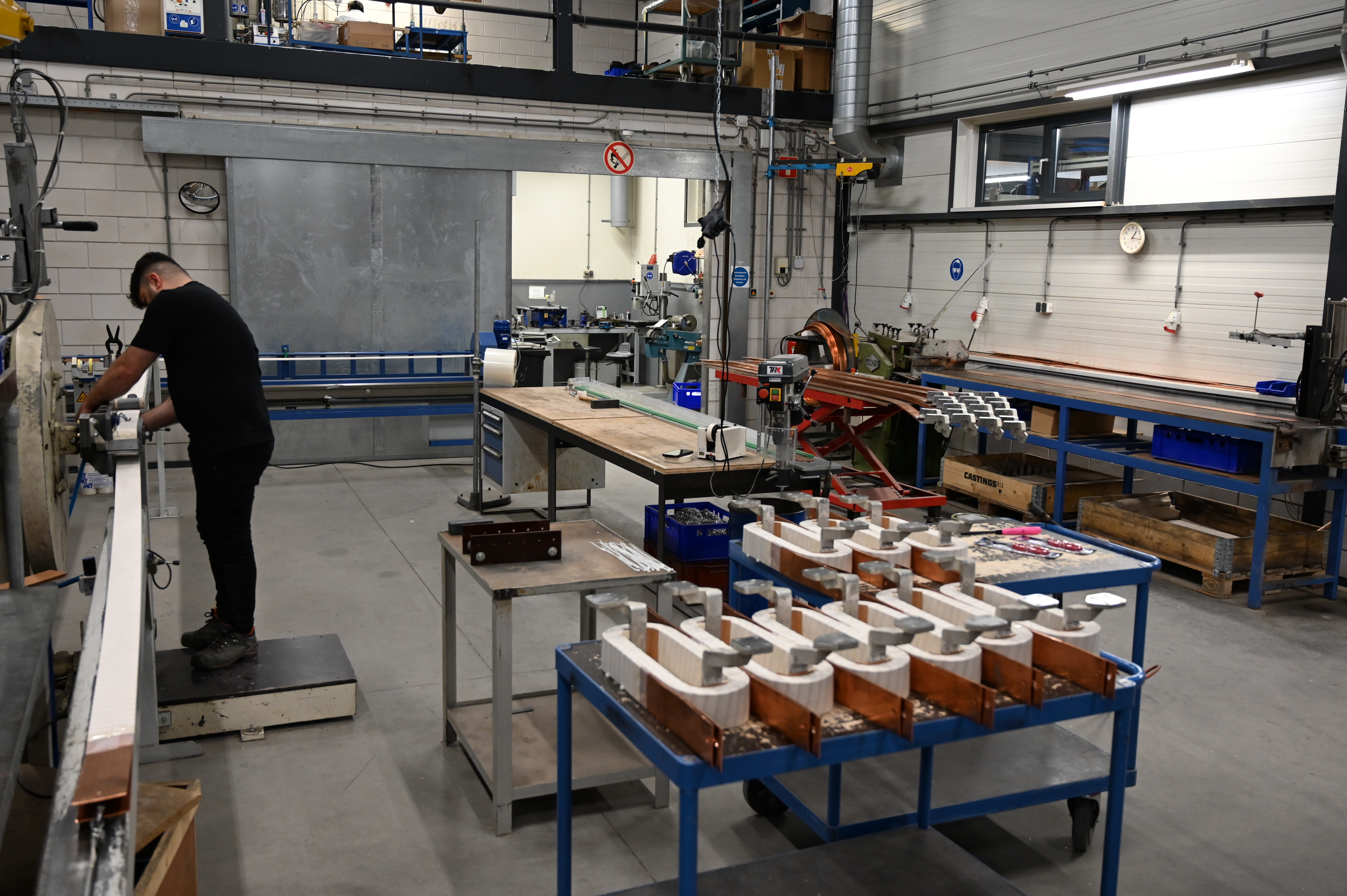
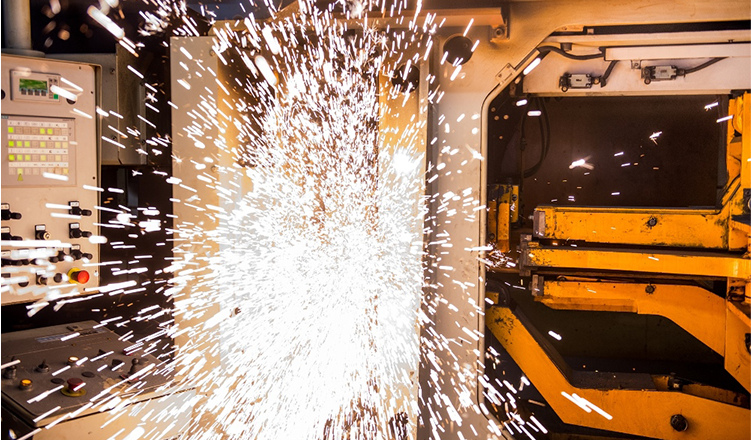
To simplify project execution, the required systems can be prefabricated and assembled in our Rail Service Center in Hilversum. Rails are welded to expansion joints and bridge transitions using high-quality flash-butt welding processes. Combined with our logistics services, this creates an integrated solution in which a significant portion of the work is completed in advance. As a result, on-site activities are reduced and projects can be executed more efficiently and quickly. In many cases, complete bridge track lengths can even be delivered without requiring any metallurgical welds on the bridge itself.
System Expertise Makes the Difference
Railway bridges do not require a single product or individual measure. Components, fastening systems, bridge structures and transition zones all influence one another and must be assessed as a complete system.
This is precisely where our role as a systems partner adds value: connecting technical requirements with practical execution.
Reliable Delivery Within Limited Possession Periods
New regulations require a different approach to railway bridge projects. By combining engineering expertise, prefabrication, product availability and logistical coordination, we help contractors and infrastructure managers deliver projects in accordance with current requirements, with less work on track, reduced execution risks and a more predictable project schedule within limited possession periods.
For more information, please contact Martijn van de Beek, Product Manager.

Martijn van de Beek
Product Manager
Gespecialiseerd in integrale spoorsystemen, waaronder: ES-lassen (NRG), systemen en componenten voor wissels en kruisingen, kunstwerken (zoals spoorbruggen) en spoorbeëindigingen.
martijn.vandeBeek@voestalpine.com