Manganese steel crossings: not a luxury product, but a strategic choice to reduce maintenance pressure and failure risks
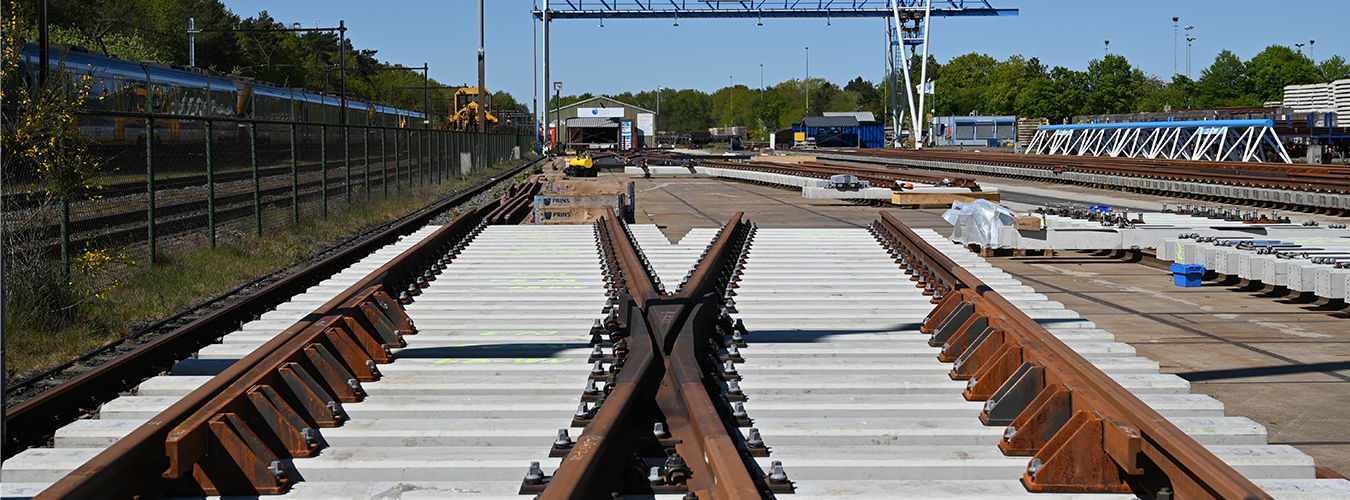
Turnouts remain one of the most failure‑prone components in the Dutch railway network. Today, they operate under particularly challenging conditions. More intensive use, higher axle loads and increased service life requirements leave ever less room for disruptions and maintenance. In this complex operating environment, the choice of the right crossing can make all the difference. After all, the crossing is one of the most critical components of a turnout and often decisive for the quality and availability of an entire turnout system.
Manganese steel: not a luxury, but a logical choice
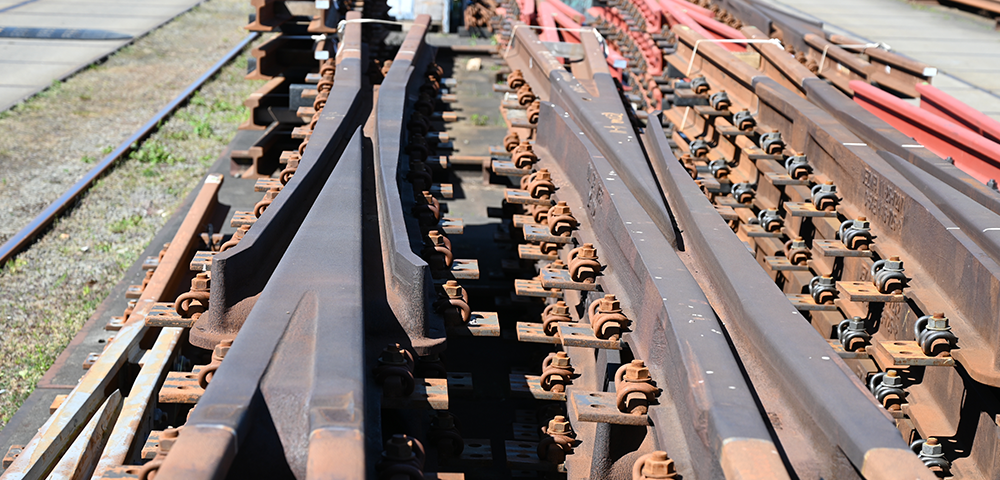
The crossing forms the heart of every turnout. At this location, wheel–rail contact is briefly interrupted, resulting in high dynamic forces and faster wear and damage than elsewhere in the track. The crossing therefore often governs the determination of maintenance intervals and is of great importance for the availability of a turnout system.
Manganese steel is specifically suited for heavy-duty applications: the material is tough, impact-resistant and work-hardening. This means that the surface becomes increasingly harder under traffic, while internally it retains its ability to deform. This results in a more stable wear pattern and less unexpected damage in heavily trafficked turnouts.
At locations with high loading – for example turnout types 1:9 and 1:15 – manganese steel crossings are therefore increasingly being selected. Not because they are a ‘luxury’ product, but because they are better aligned with intensive use, offer a longer service life and enable predictable maintenance. Although more expensive to procure, the total cost of ownership is lower due to reduced maintenance, fewer replacements and fewer possessions.
Technology is rarely the problem
In practice, the correct material choice is often already made, but issues frequently arise around availability and timing. A crossing that cannot be replaced immediately leads to emergency measures and temporary solutions, causing additional possessions and increased pressure on maintenance teams. These are not technical problems, but logistical risks, especially as delivery times continue to tighten.
Increasing demand makes stock essential
For heavily loaded turnouts, manganese steel is the logical material choice, but availability at the right moment is at least as important. The broader application of manganese steel crossings has further increased demand for this product. This makes supply chain agreements and delivery planning even more critical. When design, production planning and – where necessary – stock strategies are aligned with this demand, replacements can be prepared earlier and more effectively integrated into possessions. This limits delays caused by material availability and helps safeguard the operational availability of turnouts.
As a system supplier, we have many years of experience with product availability. In most cases, we can supply crossings directly from stock. In this way, we support rail contractors in preventing ad-hoc failure maintenance.
Stock is not a cost item, but risk management
Deliberately holding manganese steel crossings in stock is therefore a strategic choice for us. It not only enables faster response in the event of failures, but also allows replacements to be prepared earlier, before a turnout fails due to a fault.
In a highly intensively used railway network, every disruption has societal and financial impact. Stock is therefore not a ‘what if’, but a way to keep risks manageable and to safeguard the availability of turnouts.
Sustainable thinking requires well-considered choices
Sustainable railway asset management is not only about selecting the right material, but also about intelligently organising product availability for maintenance and replacement. This is something we are happy to contribute to. Would you like to know more? Please feel free to contact Martijn van de Beek, Product Manager.